

2:30 PM today is closer or further away than you think, depending on the clock in your hand. Either way, you need the exact time remaining, not a rough guess.
This guide shows you how to find it in seconds. You will learn simple math, handy tools, and the traps that throw off many people. Small time errors cause missed meetings and late pickups.
By the end, you will know how long until 2:30 PM today and how to track it live. Let’s start.
Understanding How Long Until 2:30 PM Today
The question “how long until 2:30 PM today” asks for one number. It is the gap between right now and 14:30 on your clock.
Quick answer: Subtract the current time from 2:30 PM (14:30). The result is your time remaining.
You can show this gap in hours, minutes, and seconds. Three things shape the result:
- Your current local time
- Your time zone
- Whether 2:30 PM has already passed
If 2:30 PM today has already passed, the next 2:30 PM is tomorrow. Your countdown will then run past 20 hours.
Most countdown tools switch to tomorrow on their own. With manual math, you must add that extra day yourself.
How Long Until 2:30 PM Changes Every Second
The answer never stays still. Every second, the gap shrinks by exactly one second.
So any number you read is already slightly old. A live display solves that problem.
Here is how the countdown looks at different points in the day:
| Current Time | Time Left Until 2:30 PM |
| 8:00 AM | 6 hours 30 minutes |
| 9:30 AM | 5 hours |
| 10:15 AM | 4 hours 15 minutes |
| 11:45 AM | 2 hours 45 minutes |
| 12:00 PM | 2 hours 30 minutes |
| 1:00 PM | 1 hour 30 minutes |
| 2:00 PM | 30 minutes |
| 2:25 PM | 5 minutes |
Notice the pattern. Each hour that passes removes exactly one hour from the countdown. That makes quick mental checks easy.
A screenshot of the time left is useless after a minute. For 2:30 PM today, a live timer is the better choice.
Ways to Calculate the Time Until 2:30 PM
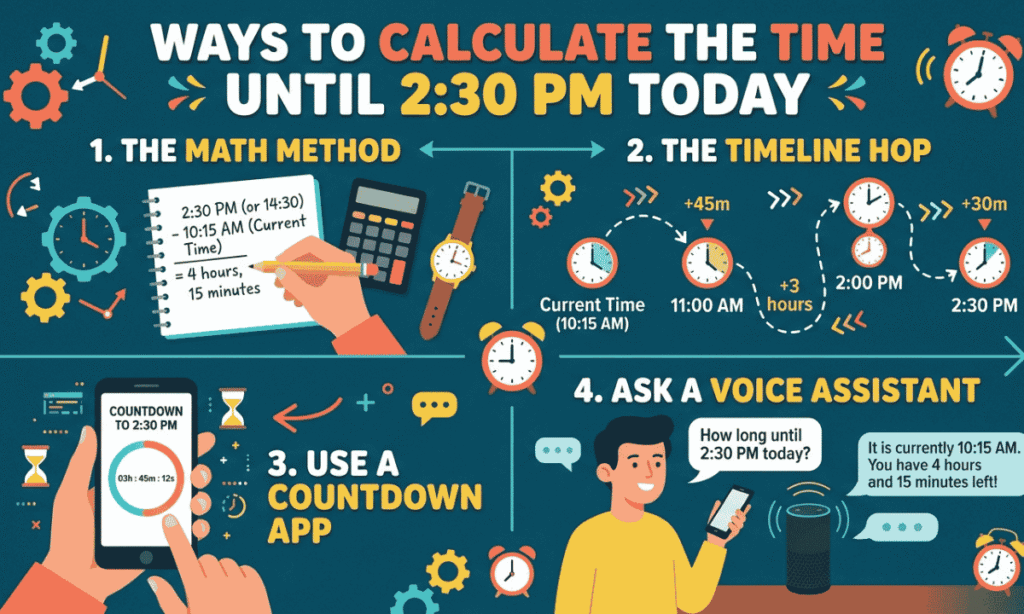
You have three easy options. Pick the one that fits your situation.
Manual calculation
Manual math works anywhere, even offline. Follow these steps:
- Convert 2:30 PM to 24-hour time. It becomes 14:30.
- Write the current time in 24-hour format.
- Subtract the current time from 14:30.
- If the minutes go negative, borrow one hour and add 60 minutes.
Example: It is 10:50 AM. Borrow an hour from 14:30 to get 13:90. Then 13:90 minus 10:50 equals 3:40. You have 3 hours and 40 minutes left.
If the current time is after 14:30, add 24 hours first. At 4:00 PM, the next 2:30 PM is 22 hours and 30 minutes away.
Manual math is fine for quick checks. It is slower when you want exact seconds.
Using a Countdown Calculator
A countdown calculator does the work live. You enter a target time, and the tool counts down in real time.
The steps are simple:
- Open a countdown or time-until tool.
- Enter 2:30 PM as the target.
- Choose today’s date.
- Start the timer.
The tool then shows hours, minutes, and seconds. This is the best way to track 2:30 PM today without doing any math.
Good tools also roll over to tomorrow when the time passes. That saves you from silly mistakes.
Using a Duration Calculator
A duration calculator compares two clock times. You enter a start time and an end time. The tool returns the difference.
Example: Start at 9:15 AM and end at 2:30 PM. The duration is 5 hours and 15 minutes.
This method suits planning more than live tracking. It does not tick down on its own.
Use it for shifts, study blocks, and meeting lengths. Some tools call this a “time between” calculator.
Understanding 2:30 PM in Different Time Formats
People write the same moment in many ways. Knowing them helps you avoid confusion.
| Format | How 2:30 PM Looks |
| 12-hour clock | 2:30 PM |
| 24-hour clock | 14:30 |
| Military time | 1430 hours |
| Spoken English | Half past two |
| Spoken 24-hour | Fourteen thirty |
| Minutes since midnight | 870 |
| Seconds since midnight | 52,200 |
Many digital tools use the 24-hour format inside. That is why 14:30 today often appears in calculators.
Watch out for noon and midnight. 12:00 PM is noon. 12:00 AM is midnight. Mixing them up can shift your countdown by 12 hours.
The “PM” part matters too. 2:30 AM is a totally different moment, and it falls in the middle of the night.
Comparing 2:30 PM with Nearby Times
It helps to see 2:30 PM next to the times around it. Here is the gap from noon:
| Target Time | 24-Hour Format | Time Left From 12:00 PM |
| 2:00 PM | 14:00 | 2 hours |
| 2:15 PM | 14:15 | 2 hours 15 minutes |
| 2:30 PM | 14:30 | 2 hours 30 minutes |
| 2:45 PM | 14:45 | 2 hours 45 minutes |
| 3:00 PM | 15:00 | 3 hours |
2:30 PM sits right in the early afternoon. It comes after lunch and before the end of many school and work days.
That makes 2:30 PM today a popular slot for meetings, calls, and appointments. It leaves time before the evening rush.
If you miss 2:30, the next common checkpoints are 2:45 and 3:00. Plan a buffer of 15 minutes just in case.
Using a Live Countdown for Better Planning
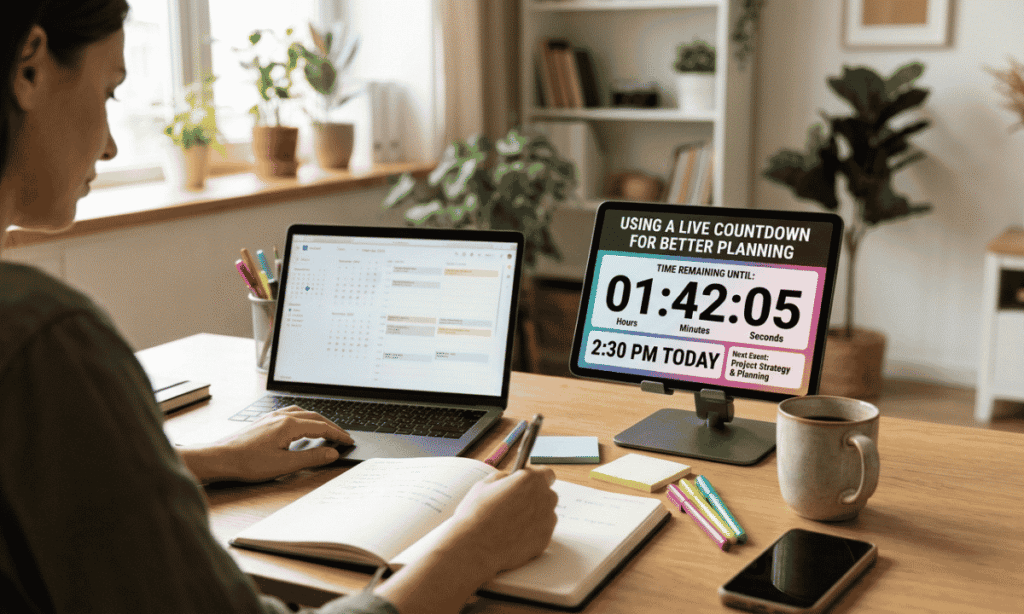
A live countdown turns a vague idea into a clear deadline. Seeing seconds fall away makes time feel real.
Here is where a countdown to 2:30 PM today helps most:
- Online meetings and webinars
- School pickups and class starts
- Package deliveries and service visits
- Exams, quizzes, and interviews
- Live streams and product launches
- Medicine and break reminders
A countdown also helps you work backward. If you need 20 minutes to travel, leave at 2:10 PM. If you need 10 minutes to prepare, start at 2:00 PM.
This habit is called time blocking. You split the time remaining into small, useful steps.
Keep the countdown visible. A timer on a second screen or a phone stand works well.
Time Zones Matter More Than People Think
A clock only means something inside its own time zone. Your 2:30 PM may be someone else’s evening or even their next morning.
Always confirm the time zone before you share a time. This matters for global teams, online classes, and international calls.
Here is the same moment, 2:30 PM UTC, in several regions (standard time):
| Region | Offset From UTC | Local Time |
| UTC | +0 | 2:30 PM |
| United Arab Emirates | +4 | 6:30 PM |
| India | +5:30 | 8:00 PM |
| Japan | +9 | 11:30 PM |
| US Eastern (standard) | −5 | 9:30 AM |
| US Pacific (standard) | −8 | 6:30 AM |
Most devices use your local zone by default. A countdown to 2:30 PM today then follows your own clock.
Problems start when you schedule across regions. Always write the zone, like “2:30 PM UTC.”
Tip: When in doubt, share the time in UTC. Then each person can convert it.
Daylight Saving Time Can Change Everything

Many countries move their clocks twice a year. This is called daylight saving time, or DST.
In spring, clocks jump forward by one hour. In autumn, they fall back by one hour.
These changes usually happen in the early morning, often around 2:00 AM. That is before 2:30 PM, so they affect the whole day’s math.
Here is what can go wrong:
- A manual count made before the change can be off by one hour.
- Old calendar entries may shift unexpectedly.
- Cross-region meetings may move at different dates.
Different places switch on different dates. In 2026, many European countries changed their clocks on October 25. The United States changes on November 1.
That gap creates odd weeks. The time difference between two regions can shift by an hour for a few days.
Many countries do not use DST at all. If you work with them, double-check the offset.
Live tools update automatically. They read your device’s time zone rules, which makes them safer than mental math on a DST day.
Read More What Time Was It 5 Hours Ago
Popular Tools That Help Track the Countdown
You do not need fancy software. Simple tools already on your devices can do the job.
Countdown timers
A countdown timer counts down from a set length. You can set it for 90 minutes, for example.
It works best when you know the length, not the clock time. Online versions can also target a specific time.
Time-until calculators
A time-until calculator uses a target clock time. You enter 2:30 PM, and it shows the gap in real time.
This is the most direct way to track 2:30 PM today. Many versions show hours, minutes, and seconds together.
Phone alarms
Alarms are simple and reliable. Set one for 2:30 PM, and your phone does the rest.
Add a second alarm at 2:15 PM as a warning. Label both so you remember why they ring.
Calendar reminders
Calendar apps link time to tasks. You can attach a note, a link, or a location.
Set reminders at 30 minutes and 10 minutes before. Calendars also adjust for time zones and DST.
Digital clocks
A large digital clock gives a constant visual cue. Some show seconds, which helps with precise timing.
They do not calculate the gap for you. Pair a clock with a quick mental check.
Productivity Benefits of Knowing the Exact Countdown
Exact time awareness changes how you work. It turns a fuzzy day into clear segments.
The main benefits include:
- Less stress: You stop wondering how much time is left.
- Better focus: A clear end point helps you stay on one task.
- Fewer late arrivals: You can plan travel and prep time with confidence.
- Better estimates: You learn how long tasks really take.
- Stronger routines: Repeated deadlines build good habits.
Try this simple method. Look at the time remaining and split it into blocks. If you have 90 minutes, use three 30-minute blocks.
A countdown to 2:30 PM today also creates healthy pressure. It nudges you to finish before the deadline.
Keep some buffer time. Aim to finish 10 minutes early so small delays do not hurt you.
Morning vs Afternoon Countdowns
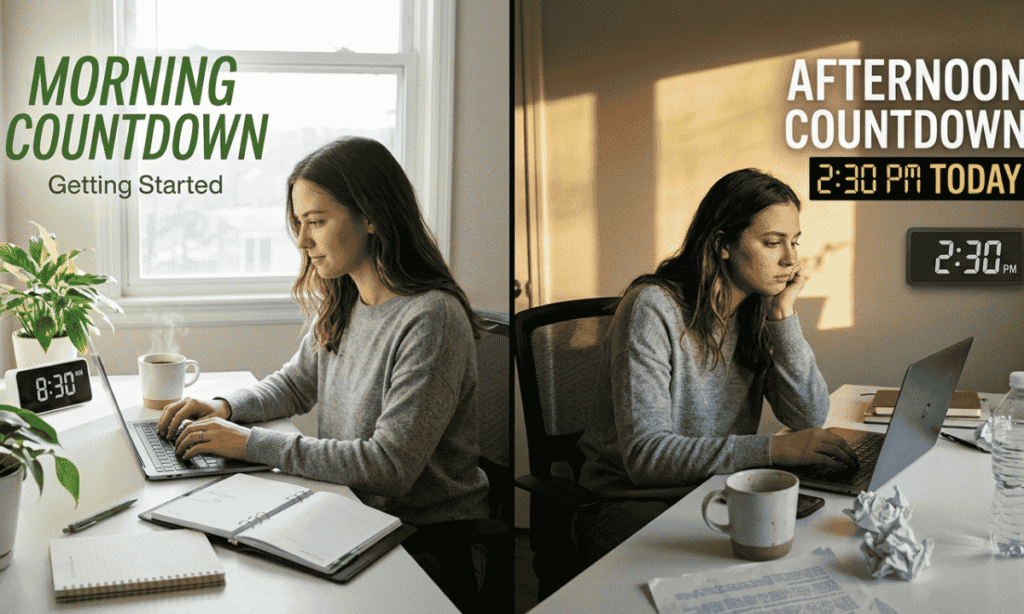
Morning and afternoon countdowns feel different. Energy, focus, and interruptions change through the day.
| Factor | Morning Countdown | Afternoon Countdown |
| Energy level | Usually higher | Often dips after lunch |
| Interruptions | Fewer early on | More messages and calls |
| Common use | Starting work, commutes | Meetings, pickups, deadlines |
| Planning room | Many hours ahead | Less time to adjust |
| Typical risk | Oversleeping | Running out of day |
Morning targets give you a long runway. You can correct mistakes and still arrive on time.
Afternoon targets leave less room. A countdown to 2:30 PM today works best when you check it more often.
Many people hit a slump around 1:00 or 2:00 PM. A visible timer can help you stay alert and avoid drifting.
Also remember the AM and PM labels. Mixing them up is more common than you think.
Choosing the Right Countdown Tool
The best tool depends on your goal. Ask yourself a few simple questions first.
- Do I need a live display or just a reminder?
- Do I need to see seconds?
- Will I work across time zones?
- Do I need the tool offline?
- Do I want alerts before the deadline?
Use this table to decide:
| Your Need | Best Choice |
| Live count to a clock time | Time-until calculator |
| A simple alert | Phone alarm |
| Meetings with details | Calendar reminder |
| Fixed-length tasks | Countdown timer |
| Planning a schedule | Duration calculator |
| Always-visible time | Digital clock |
For most people, a time-until calculator plus a phone alarm is enough. The calculator shows the live gap. The alarm makes sure you never miss it.
Choose tools with a clean display and automatic time zone support. Avoid cluttered pages with too many ads.
Read More What Time Was It 15 Hours Ago
Conclusion
Knowing how long until 2:30 PM today is easy once you know the method. Subtract your current time from 14:30, and you have the answer.
For live results, use a countdown calculator. It updates every second and handles tomorrow’s rollover for you.
Remember the details that cause errors. Check your time zone, watch for daylight saving changes, and confirm AM or PM.
Pair a live timer with a phone alarm for the best results. With these simple habits, 2:30 PM today will never catch you off guard.
Frequently Asked Questions
How long until 2:30 PM today?
Subtract your current time from 14:30. A live countdown tool shows the exact result down to the second.
What is 2:30 PM in 24-hour time?
It is 14:30. In military style, it is written as 1430 hours.
How many minutes are there from noon to 2:30 PM?
There are 150 minutes. That equals 2 hours and 30 minutes.
What if 2:30 PM today has already passed?
The countdown moves to tomorrow’s 2:30 PM. Most tools do this automatically.
Does my time zone change 2:30 PM today?
Yes. The same moment shows a different local time in each zone, so always state the zone.
Does daylight saving time affect the countdown?
It can, on the day clocks change. Live tools adjust on their own, but manual math may be off by one hour.
What is the best tool to track the countdown?
A time-until calculator is the most direct choice. Add a phone alarm as a backup.