

How long until 3 PM? You can answer that in seconds once you know the current time. It sounds simple, yet people ask it all day long.
Maybe you are waiting for a meeting, a school bell, or a train. Maybe you just want to know how much of the afternoon is left. A quick countdown puts you back in control.
This guide covers the exact math, the best tools, and smart ways to use the hours before 3 PM. Let’s get started.
How Long Until 3:00 PM Depends on the Current Time
The answer changes every minute. At 9:00 AM, you wait six hours. At 2:30 PM, you wait thirty minutes.
Your starting point is the only moving part. The target stays fixed. It is 3:00 PM, or 15:00 on a 24-hour clock.
Quick answer: Subtract the current time from 3:00 PM. The result is the time left until 3 PM.
Here is a handy reference table for time remaining today.
| Current Time | Time Left | Minutes Left |
| 6:00 AM | 9 hours | 540 |
| 8:00 AM | 7 hours | 420 |
| 9:00 AM | 6 hours | 360 |
| 10:30 AM | 4 hours 30 minutes | 270 |
| 12:00 PM (noon) | 3 hours | 180 |
| 1:15 PM | 1 hour 45 minutes | 105 |
| 2:00 PM | 1 hour | 60 |
| 2:45 PM | 15 minutes | 15 |
| 2:59 PM | 1 minute | 1 |
If your time falls between two rows, just add or subtract the extra minutes.
Understanding the Time Calculation
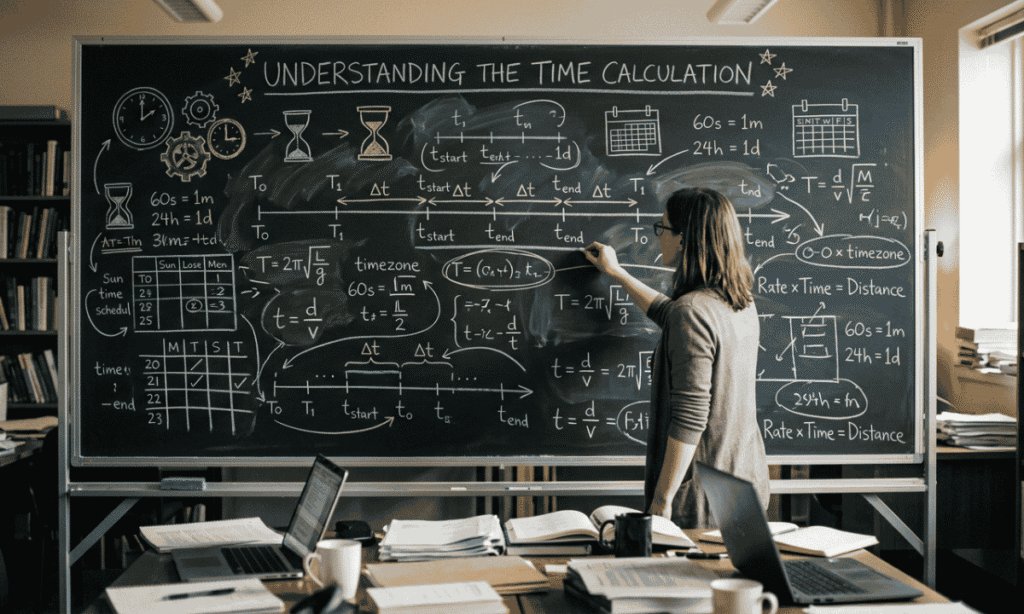
The math is easy once you use a clear method. You only need basic subtraction.
Follow these steps:
- Write the current time in 24-hour format.
- Write the target time as 15:00.
- Subtract the current time from 15:00.
- If the minutes go below zero, borrow one hour and add 60 minutes.
- Write the answer in hours and minutes.
Example: It is 11:40 AM. That is 11:40 in 24-hour time. Now take 15:00 and subtract 11:40. You borrow an hour, so 14:60 minus 11:40 equals 3:20. You have 3 hours and 20 minutes.
There is a second shortcut. Convert everything to minutes since midnight. The target is 900 minutes after midnight, because 15 hours times 60 equals 900.
At 11:40 AM, you have used 700 minutes. Subtract 700 from 900 and you get 200 minutes. That equals 3 hours and 20 minutes again.
Want seconds? Multiply the minutes by 60. Two hundred minutes equals 12,000 seconds.
Common Calculation Mistakes
- Treating an hour as 100 minutes instead of 60.
- Mixing up AM and PM.
- Forgetting that 12:00 PM is noon, not midnight.
- Ignoring your time zone.
- Trusting a clock that runs fast or slow.
How Long Until 3:00 PM Across Different Time Formats
The same moment can look very different depending on the format. Knowing all three styles helps you read schedules, tickets, and work shifts without confusion.
Here is a side-by-side view.
| Format | How It Is Written | How People Say It |
| 12-hour clock | 3:00 PM | Three o’clock in the afternoon |
| 24-hour format | 15:00 | Fifteen hundred |
| Military time | 1500 | Fifteen hundred hours |
12-hour Clock
The 12-hour clock splits the day into two halves. AM covers midnight to noon. PM covers noon to midnight.
So 3:00 PM means three hours after noon. It is common in the United States, Canada, Pakistan, India, and Australia for everyday use.
The tricky part is the label. Midnight is 12:00 AM and noon is 12:00 PM. Many people mix those up.
24-hour Format
The 24-hour format runs from 00:00 to 23:59. There is no AM or PM, so there is no mix-up.
To convert, add 12 to any PM hour. Three plus twelve equals 15, so the time becomes 15:00.
This style is popular across Europe, Asia, hospitals, airlines, and transit systems. It also makes subtraction simple.
Military Time
Military time is the 24-hour system written without a colon. Three in the afternoon becomes 1500.
It is spoken as fifteen hundred hours. The first two digits are the hour. The last two digits are the minutes.
So 1530 means 3:30 PM and 1445 means 2:45 PM. Armed forces, emergency services, and aviation rely on this style for clear communication.
Why 3 PM Feels Like an Important Part of the Day
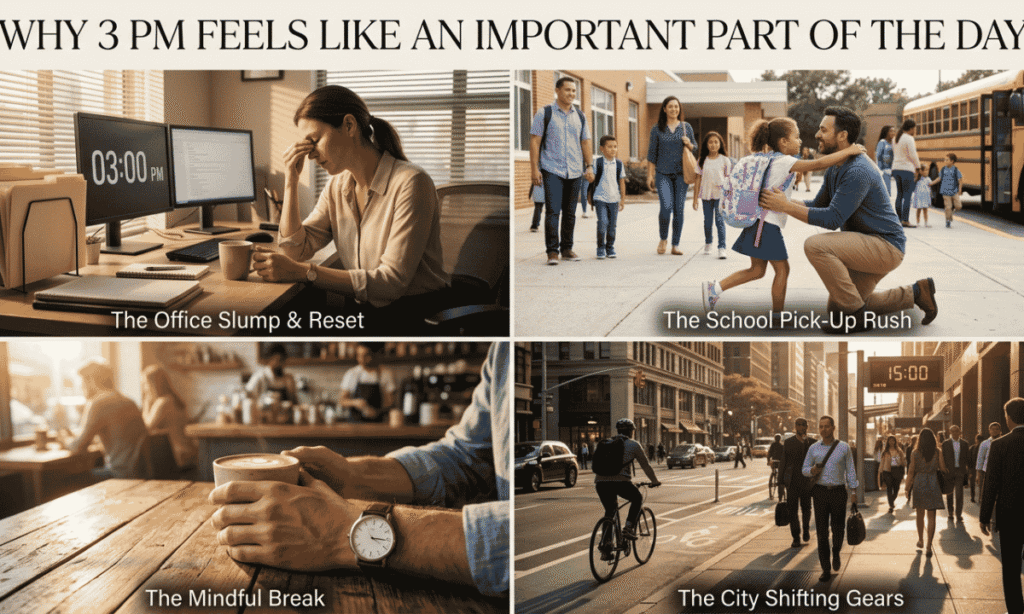
There is a reason people watch the clock around this hour. It sits at a turning point between the busy middle of the day and the wind-down.
Here is why this hour matters to so many people:
- School ends. Many schools dismiss students around this time, so parents plan pickups around it.
- The afternoon slump hits. Energy often dips after lunch, and focus can fade.
- Deadlines cluster. Offices often set same-day cutoffs before the end of business.
- Banks and couriers close their windows. Cut-off times for transfers and same-day shipping often fall in the afternoon.
- Markets enter the final stretch. The New York Stock Exchange closes at 4:00 PM Eastern, so the last hour of trading begins at 3:00 PM.
- Coffee and snack breaks happen. It is a natural pause point for many workers.
In short, the hour works as a checkpoint. You can judge how much of your plan is done and how much is left.
Using a Countdown Timer for Better Productivity
A countdown turns a vague deadline into a clear target. Instead of thinking you have some time, you see the exact hours, minutes, and seconds left.
That clarity helps in three ways:
- It creates healthy urgency.
- It stops you from underestimating tasks.
- It makes it easier to split work into small blocks.
Try this simple plan with the Pomodoro method. It uses 25 minutes of focus and a 5-minute break.
Suppose it is 1:00 PM. You have two hours left. That fits four full Pomodoro rounds.
How to use a countdown timer step by step:
- Check how much time is left.
- List the tasks you must finish.
- Estimate the minutes each task needs.
- Add a buffer of 10 to 20 percent.
- Start the timer and work in short sprints.
Seeing the numbers shrink keeps your attention on the task. You waste less time guessing.
Best Digital Tools for Counting Down to 3 PM
You do not need fancy gear. Most people already own a tool that works.
The right choice depends on your habits. Some people want a big visual timer. Others want a silent buzz on the wrist.
| Tool | Best For | Main Advantage | Main Limit |
| Online countdown timer | Desk work | Live hours, minutes, seconds | Needs an open tab |
| Time calculator | Planning | Exact gap between two times | No live updates |
| Smartphone clock | Everyone | Alarms and timers built in | Notifications can distract |
| Smartwatch | On the move | Silent wrist alerts | Small screen |
Countdown Timers
Online countdown timers show the time left in a live display. Many offer full-screen mode, sound alerts, and custom colors.
They work well on a second monitor. You can also project one in a classroom or meeting room.
Pick a simple one with no clutter. The goal is a fast glance, not a distraction.
Time Calculators
A time calculator, also called a duration calculator, works out the gap between two clock times. You enter a start and an end.
It is perfect for planning. For example, you can check how long a drive fits before 3:00 PM.
Use it when you need an exact number but do not need a live display.
Smartphone Clocks
Your phone already has a timer and an alarm. Set an alarm for 3:00 PM and you are covered.
Voice assistants make it even faster. Just say the time you need and the phone does the rest.
Add a reminder five or ten minutes earlier. That gives you time to wrap up.
Smartwatches
A smartwatch taps your wrist when time is almost up. It is quiet, so it suits meetings and classrooms.
You can also glance at a timer complication on the watch face. That keeps your phone in your pocket.
This means fewer notifications and fewer distractions.
Local Time and Time Zones Matter More Than You Think
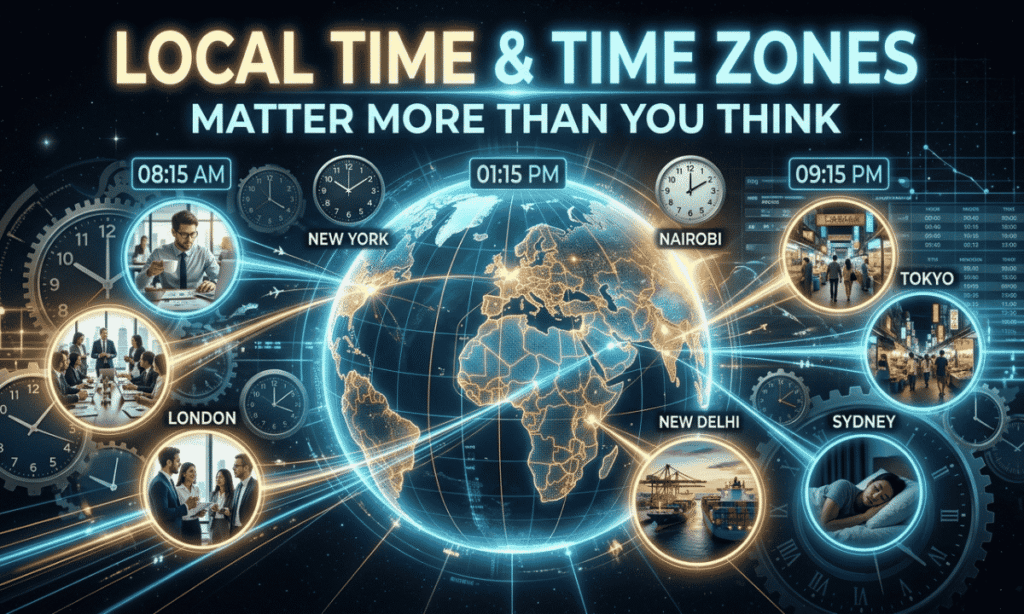
The phrase 3 PM always refers to local time. The same clock reading means different moments in different places.
If you work with people abroad, always state the time zone. Write 3:00 PM GST or 3:00 PM UTC, not just 3:00 PM.
This table shows how one moment changes across the world. These offsets stay fixed all year.
| When It Is 3:00 PM In | The Time In Dubai | The Time In India | The Time In Tokyo |
| Dubai (UTC+4) | 3:00 PM | 4:30 PM | 8:00 PM |
Daylight saving time adds another twist. Many countries move their clocks, but not on the same date. Gaps between cities can shift by an hour for a few weeks.
Tips to avoid time zone mistakes:
- Turn on automatic time zone on your device.
- Add a second clock for your most common partner city.
- Put the zone abbreviation in every invite.
- Double-check around daylight saving changes.
Real Life Situations Where Knowing the Countdown Helps
A countdown is not only for productivity geeks. It helps in plain, everyday moments.
Work
Many tasks have a same-day cutoff. A report, an invoice, or a client reply may be due before 3:00 PM.
Knowing the time left helps you pick what to finish first. It also tells you when to stop polishing and hit send.
Teams can share a timer in a meeting to keep the discussion on track.
School
Students use the countdown to pace exams and assignments. Teachers use it to plan the last lesson before dismissal.
Parents also watch the clock. Pickup lines form fast, so leaving ten minutes early often saves time.
Appointments
Doctor visits, interviews, and service bookings often land in the afternoon. Arriving late can mean losing the slot.
Work backward from the start time. Subtract travel time, parking, and check-in. The result is your real leave time.
Travel
Trains, buses, and flights run on strict schedules. Check-in and boarding windows close on time.
Use the 24-hour format on tickets to avoid AM and PM errors. A departure at 15:00 is 3 PM, not 3 AM.
Always add a buffer for traffic and queues.
Personal Plans
The countdown also helps off the clock. You can plan a gym session, a call with family, or a quiet walk.
It is useful in the kitchen too. If guests arrive at 3:00 PM, you can time each dish.
Small plans feel easier when you can see the time left.
Planning Your Afternoon Around 3 PM
A good afternoon starts with a plan. Time blocking is the simplest way to do it.
Divide the hours before 3 PM into clear chunks. Give each chunk one job.
Here is a sample plan for a busy day:
| Time Block | Task | Why It Works |
| 12:00 – 12:45 PM | Lunch and short walk | Restores energy |
| 12:45 – 1:45 PM | Deep work on the top task | Focus is still decent |
| 1:45 – 2:15 PM | Emails and quick replies | Low-effort work |
| 2:15 – 2:45 PM | Final review and edits | Catch errors early |
| 2:45 – 3:00 PM | Wrap up and prepare | Leaves a safe buffer |
You can shift the blocks to match your own schedule. The idea stays the same.
A few planning rules:
- Do your hardest task first.
- Keep the last fifteen minutes free.
- Silence alerts during deep work.
- Move small tasks into the slump window.
With this setup, you reach 3 PM calm instead of rushed.
The Psychology of Waiting
Time does not always feel the same. Ten minutes in a dull waiting room can feel longer than an hour of fun.
Researchers who study time perception link this to attention. When you focus on the clock, time tends to feel slower. When you are absorbed in a task, it tends to feel faster.
This is why the last hour before an event can drag. You keep checking, and each check stretches the wait.
Anticipation plays a part too. Looking forward to something can make the wait feel longer. Dreading something can make it feel shorter.
You can use this on purpose. Start a task you enjoy, and the minutes pass more easily.
A countdown also reduces anxiety. Knowing the exact time left removes the guessing, and that brings calm.
Tips for Making Time Work for You
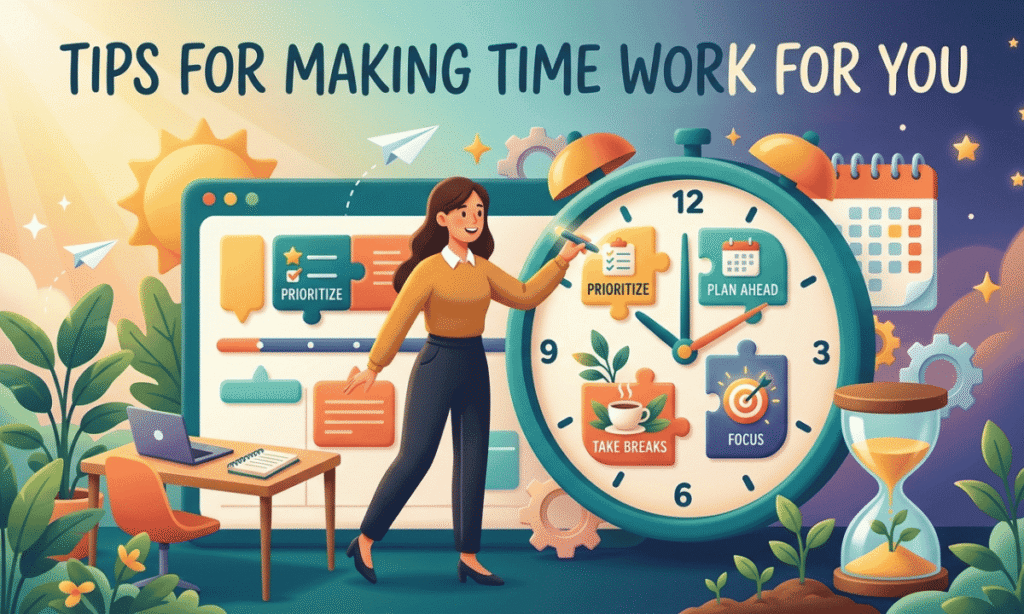
Time is the one resource you cannot get back. These habits help you use it well.
- Check the time once, then act. Constant clock watching wastes focus.
- Set one clear target. A single goal for the next hour beats a long list.
- Use alarms, not memory. Let a device remind you.
- Add a buffer. Most tasks take longer than planned.
- Break big jobs into small ones. Short steps are easier to start.
- Start with the hardest task. Your energy is highest earlier in the day.
- Take short breaks. A five-minute pause protects focus during the afternoon dip.
- Sync your clocks. Make sure every device shows the same time.
- Review at the end. Note what worked and adjust tomorrow.
Pick two or three of these and try them this week. Small habits add up fast.
Conclusion
Knowing how long until 3 PM is simple once you master the basics. Take the current time, subtract it from 15:00, and you have your answer.
You also learned how the 12-hour, 24-hour, and military formats connect. Add a good countdown timer, a smartphone alarm, or a smartwatch, and the hours become easy to manage.
Time zones, daylight saving, and your own focus all shape how you use the afternoon. Plan in blocks, leave a buffer, and keep your target in sight.
The next time you wonder how long until 3 PM, you will know the answer in seconds. More importantly, you will know what to do with the time you have.
Frequently Asked Questions
How long until 3 PM today?
Subtract the current time from 15:00. For example, at 1:30 PM you have one hour and thirty minutes left.
How many hours until 3 PM?
It depends on the current time. From 9:00 AM it is 6 hours, and from noon it is 3 hours.
How many minutes until 3 PM from noon?
There are 180 minutes between 12:00 PM and 3:00 PM. That equals exactly three hours.
What is 3 PM in 24-hour time?
It is 15:00. Add 12 to the hour to convert any PM time.
What is 3 PM in military time?
It is 1500, spoken as fifteen hundred hours. Military time drops the colon.
How many seconds until 3 PM from 2 PM?
There are 3,600 seconds in one hour. So from 2:00 PM, you have 3,600 seconds left.
Does 3 PM change with time zones?
Yes. It always means local time, so the same moment shows different clock times around the world.
Is 3 PM considered afternoon?
Yes. Afternoon runs from noon until about 5:00 or 6:00 PM, so it sits in the middle.