


What time was it 5 hours ago? It sounds like a quick question, yet many people get it wrong. One missed midnight or one flipped AM and PM can ruin the answer.
This guide shows you how to find the exact time 5 hours ago in seconds. You will learn simple mental math, clear 12 hour and 24 hour methods, and smart tools that do the work for you.
By the end, you can count five hours back from any clock reading. No stress, no guesswork. Let’s get started.
Understanding What Time Was It 5 Hours Ago
When someone asks what time it was 5 hours ago, they want a past clock reading. You take the current time and move back by five full hours. Only the hour changes. The minutes stay the same.
Five hours equals 300 minutes. It also equals 18,000 seconds. These numbers help when you need precision.
Think of it as the opposite of setting an alarm. An alarm looks forward. Reverse time calculation looks back.
The same idea works for any gap. Two hours, eight hours, or twelve hours all follow the same method. Only the number changes.
How Time Subtraction Actually Works
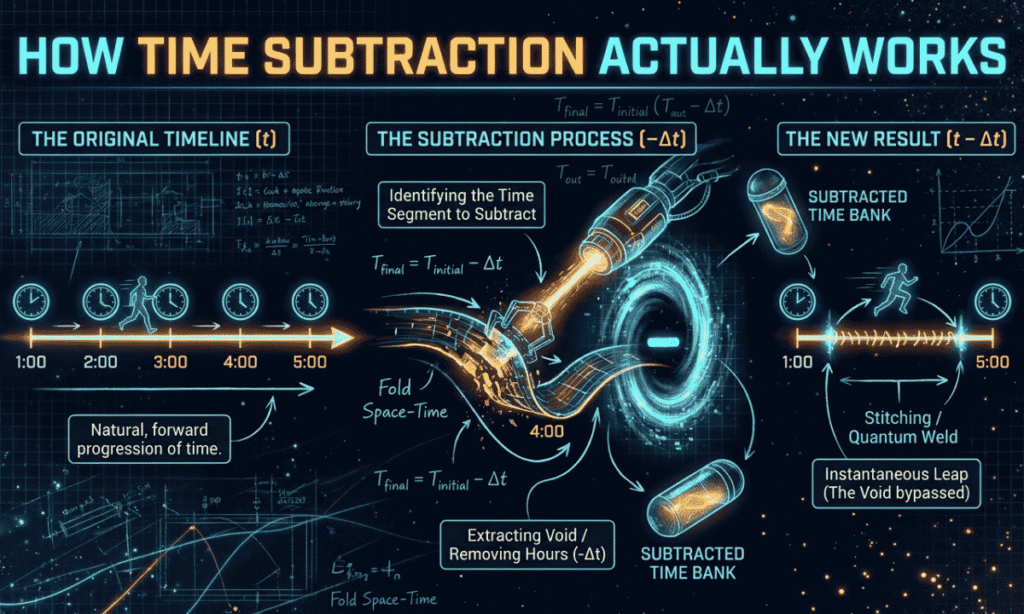
Clocks use base 12 or base 24 for hours. They use base 60 for minutes. That mix is why time math feels odd.
Regular subtraction does not always fit. You need a few small rules.
Here is the simple process for finding 5 hours ago:
- Write down the current time.
- Subtract 5 from the hour.
- Keep the minutes exactly the same.
- If the hour drops below 1 on a 12-hour clock, add 12.
- Switch AM to PM, or PM to AM, if you crossed noon or midnight.
- Check whether the date moved back by one day.
Minutes never change because five hours is a whole number. So 4:47 PM becomes 11:47 AM. The 47 stays put.
Why Reverse Time Calculation Matters in Everyday Life
We look backward in time more often than we think. A quick calculation can save money, stress, and even your health.
Here are common reasons people check an earlier time:
- Tracking when a medicine dose was taken
- Finding out when a flight departed
- Counting hours worked on a shift
- Matching timestamps in emails and messages
- Working out when a package status last changed
- Reviewing a gaming session or stream
Reverse time calculation also helps with time zones. It keeps remote teams in sync. It also helps you read logs, receipts, and delivery updates with confidence.
What Time Was It 5 Hours Ago Using the 12 Hour Clock
The 12-hour clock uses AM and PM. It is common in daily life. It also causes most of the confusion.
To find 5 hours ago on this clock, subtract five from the hour. If the answer is zero or negative, add twelve. Then check the AM or PM label.
The label flips each time you pass 12 o’clock. Noon and midnight are the two switch points.
| Current Time | Time 5 Hours Ago |
| 12:00 PM | 7:00 AM |
| 3:30 PM | 10:30 AM |
| 5:00 PM | 12:00 PM |
| 8:15 PM | 3:15 PM |
| 10:00 PM | 5:00 PM |
| 2:00 AM | 9:00 PM (previous day) |
Notice the last row. The date moves back there. That is the part people forget.
What Time Was It 5 Hours Ago Using the 24 Hour Clock
The 24-hour clock is also called military time. It has no AM or PM. That makes the math cleaner.
You simply subtract 5 from the hour. If the result is negative, add 24. The date then moves back one day.
This format is popular in aviation, healthcare, and computing. It removes the AM and PM guesswork.
| 24-Hour Time Now | 5 Hours Earlier |
| 18:00 | 13:00 |
| 14:20 | 09:20 |
| 07:45 | 02:45 |
| 03:00 | 22:00 (previous day) |
| 00:30 | 19:30 (previous day) |
| 23:10 | 18:10 |
When the hour is 5 or higher, you stay on the same day. When it is lower than 5, you cross into yesterday.
Crossing Midnight: The Most Common Mistake
Midnight is where most errors happen. The date changes, and the AM and PM label flips at the same time.
Say it is 2:30 AM on Thursday. Subtracting five hours does not give you a negative time. It gives you 9:30 PM on Wednesday.
Here is a trick that works well. Subtract the hours needed to reach midnight first. Then subtract what remains.
From 2:30 AM, go back 2 hours 30 minutes to reach midnight. You still have 2 hours 30 minutes to go. That lands you at 9:30 PM the day before.
Two mistakes are very common:
- Forgetting to change the date
- Keeping AM when it should be PM
Also watch out for 12 AM and 12 PM. Midnight is 12 AM. Noon is 12 PM. Mixing them up shifts your answer by twelve hours.
Manual Time Arithmetic Without a Calculator

You do not need an app for this. A little practice makes it automatic.
Use the “minus ten, plus five” shortcut. Subtract 10 hours, then add 5 back. Or subtract 6 and add 1. Pick whichever feels easier.
You can also count backward on your fingers. Say each hour out loud as you go. It sounds silly, but it works.
The examples below show manual time arithmetic in action.
Example 1
It is 9:30 PM. Subtract 5 from 9. You get 4. Keep the 30 minutes.
The answer is 4:30 PM on the same day. No midnight crossing here.
Example 2
It is 2:15 PM. Subtract 5 from 2. You get negative 3. Add 12 to get 9.
You crossed noon, so PM becomes AM. The answer is 9:15 AM on the same day.
Example 3
It is 1:40 AM on Friday. Subtract 5 from 1. You get negative 4. Add 12 to get 8.
You crossed midnight, so AM becomes PM. The date goes back one day. The answer is 8:40 PM on Thursday.
Using Online Time Calculators
Sometimes you want a fast, error-free answer. An online time calculator does that in one click.
Most tools work the same way. You enter a start time or use your current time. Then you choose “subtract” and type 5 hours. The tool shows the result and the date.
Good calculators offer a few helpful features:
- Automatic date change when crossing midnight
- Support for 12-hour and 24-hour formats
- Time zone conversion
- Options to add or subtract minutes and seconds
Your phone also helps. Search “5 hours ago” in a browser, or ask a voice assistant. Many devices show the result right away.
Still, learn the manual method too. It works offline and builds confidence.
Time Zones Make Everything More Interesting
Time zones add another layer. The phrase “five hours ago” depends on where you are standing.
Your local clock may be different from the clock of the person you are talking to. So always name the time zone when you share a time.
Here is a simple example using UTC and standard time offsets:
| Location | Offset from UTC | Time When UTC Reads 12:00 |
| London (winter) | UTC+0 | 12:00 PM |
| New York (winter) | UTC−5 | 7:00 AM |
| Dubai | UTC+4 | 4:00 PM |
| Tokyo | UTC+9 | 9:00 PM |
Daylight saving time can shift these offsets by an hour. That is a common trap. Check whether a clock change happened in the last five hours.
When in doubt, convert everything to UTC first. Then subtract. Then convert back.
Real Life Examples of Five Hour Calculations
Five hours is a useful block of time. It shows up in health, travel, work, and play.
A few moments often make people look back:
- A late-night text with a confusing timestamp
- A pending bank transfer
- A delivery scan time
- A work log you forgot to fill in
In each case, finding 5 hours ago gives you a clear reference point. The next sections cover the most common uses.
Medication Timing
Many medicines have a minimum gap between doses. Some are every four hours. Others are every six or eight.
If you took a dose at a certain time, a quick backward check tells you how long ago that was. That helps you avoid doubling up.
Always follow the label or your pharmacist’s advice. A clock calculation helps you track time. It does not replace medical guidance.
A written log or phone reminder is safer than memory. Note the exact time every time you take a dose.
Flight Timing
Travel involves time zones and long hours. Checking an earlier time can clear up confusion fast.
Airlines list times in local time at each airport. So a flight that left five hours earlier may show a different local time at the destination.
You can use backward math to answer questions like these:
- When did my friend’s flight take off?
- Did the plane leave on time?
- What time was boarding?
Convert both airports to a shared reference, like UTC. Then the numbers line up neatly.
Shift Calculation
Shift workers count hours all day. Nurses, drivers, guards, and factory staff often work long blocks.
If your shift ends at 11:00 PM, you can subtract five hours to find the halfway mark of a ten-hour shift. That mark is 6:00 PM.
This helps with breaks, overtime, and pay checks. Supervisors also use it to confirm check-in times.
Managers often set break rules by hours worked. A quick reverse calculation shows when someone qualified for a rest period.
Memory Reconstruction
Have you ever tried to remember when something happened? Time subtraction helps rebuild the day.
Suppose you got a call at 4:10 PM. You want to know what you were doing five hours earlier. That puts you at 11:10 AM. Now the mind connects it to lunch plans or a morning meeting.
Investigators, writers, and curious people use this trick. Anchoring an event to a clock time makes recall easier.
It also helps when you review photos. Camera timestamps work like little time machines.
Gaming
Gamers care about timing. Daily resets, event windows, and cooldowns often run on server time.
If an event ended five hours earlier, you need the right clock to know if you missed a reward. Server time may differ from your local time.
Streamers also review long sessions this way. A five-hour stream starting at a given time ends at a clear point.
Track your play time with a simple note. It protects your sleep and your schedule.
Human Perception Versus Digital Precision

Humans feel time differently than clocks measure it. Five hours can feel short during a fun movie marathon. It can feel endless in a waiting room.
Digital devices do not have that problem. They count each second the same way. A phone timestamp is far more reliable than a guess.
That is why people often misjudge how long ago something happened. We tend to blur the middle of a long day.
Use a clock when accuracy matters. Use your memory only for rough estimates.
| Method | Accuracy | Best Use |
| Gut feeling | Low | Casual guessing |
| Mental math | Medium to high | Quick checks |
| Online calculator | Very high | Exact answers |
| Device timestamp | Very high | Records and proof |
Tips for Accurate Reverse Time Calculation
A few habits make you faster and more precise. Try them the next time you need 5 hours ago.
- Say the time out loud with AM or PM.
- Subtract the hours first. Leave the minutes alone.
- Add 12 (or 24) when the hour goes below the limit.
- Flip AM and PM when you cross noon or midnight.
- Check the date after every calculation.
- Confirm the time zone before you start.
- Use a calculator for anything important.
It also helps to learn a few anchor points. Noon minus five is 7 AM. Midnight minus five is 7 PM. Memorize those two, and many answers come quickly.
Finally, double-check unusual cases. Daylight saving changes, leap days, and month ends can all affect the date.
Read More How Long Until 245 Pm
Conclusion
Finding the time 5 hours ago is simple once you know the steps. Subtract five from the hour. Keep the minutes. Adjust for AM and PM. Then check the date.
The 12-hour and 24-hour clocks follow the same logic. Midnight and time zones are the two places where errors hide. Watch those closely.
When speed matters, use an online calculator. When you are offline, trust manual arithmetic. Either way, you now have a reliable method for any backward time check.
Frequently Asked Questions
What time was it 5 hours ago?
Subtract five hours from your current time and keep the minutes the same. For example, if it is 6:20 PM now, it was 1:20 PM 5 hours ago.
How many minutes are in 5 hours?
There are 300 minutes in five hours. Multiply 5 by 60.
How many seconds are in 5 hours?
There are 18,000 seconds in five hours. Multiply 300 minutes by 60.
What time was it 5 hours ago from 10 PM?
It was 5:00 PM. Subtract 5 from 10, and keep the PM label.
What time was it 5 hours ago from 3 AM?
It was 10:00 PM on the previous day. You cross midnight, so the date moves back.
Does the date change when calculating 5 hours ago?
Yes, if the current time is earlier than 5:00 AM. In that case, the result falls on the previous day.
How do I calculate 5 hours ago manually?
Subtract 5 from the hour, add 12 if needed, and flip AM or PM when you cross noon or midnight. Then check the date.
What is 5 hours ago in 24-hour time?
Subtract 5 from the hour and add 24 if the result is negative. For example, 03:00 becomes 22:00 the day before.
Can an online calculator find the exact time 5 hours ago?
Yes. Enter your start time, choose subtract, and type 5 hours. Most tools also show the correct date and time zone.
Does time zone affect the answer?
Yes. The result depends on the clock you start with. Always confirm the time zone and watch for daylight saving changes.
Leave a Comment Cancel reply
Have a tricky time puzzle or a handy shortcut of your own? Share it in the comments. Your tip might help another reader.
Master Grammar, Improve Writing, and Speak with Confidence
Clear thinking leads to clear writing. Keep practicing small skills, like time math and sentence structure, and your confidence will grow.