

2:45 PM is a popular time for classes, meetings, and appointments. That is why many people ask, “how long until 2:45 PM?” The answer depends on one thing: the time on your clock right now. It sounds simple, yet small errors cause missed calls and late arrivals.
The good news is that the math is easy. You only need a clock and basic subtraction. No app, no calculator, and no stress. In under a minute, you can know exactly how much time is left. Think of it as a handy shortcut for busy days.
This guide covers a quick method, real-life examples, common mistakes, and a handy countdown table. Use it whenever a fixed time shapes your plans.
1. Meaning / Definition of 2:45 PM
2:45 PM means forty-five minutes past two o’clock in the afternoon. Many people call it “quarter to three.” In 24-hour format, it is written as 14:45. Military time writes it as 1445.
The phrase “how long until 2:45 PM” asks for a time gap. It is a countdown question. The answer is given in hours and minutes.
Your current time is the starting point. The target time is the end point. The space between them is your time remaining.
This simple idea works for any clock time. Once you learn it, you can use it for any other time of day.
Quick Answer
The time left until 2:45 PM equals the target time minus your current time.
Here are three quick examples:
- At 1:45 PM, you have 1 hour left.
- At 2:15 PM, you have 30 minutes left.
- At 12:00 PM, you have 2 hours and 45 minutes left.
If the clock has already passed 2:45 PM, the next one arrives tomorrow.
2. Meaning in Simple Words
In simple words, the question means, “How many minutes until quarter to three?” That is all it asks. It is a basic time difference problem.
Think of a bus timetable. You check the time now, then check the time of the bus. The gap is how long you wait.
A full day has 1,440 minutes. The time 2:45 PM sits at minute 885 of that day. This number makes fast math easier, as you will see below.
Easy Calculation Method
Follow these four steps to find your time remaining:
- Check your current time on a reliable clock.
- Use the same format for both times (12-hour or 24-hour).
- Subtract the current time from 2:45 PM.
- Write the answer in hours and minutes.
Method 1: Count up in steps
Count from your current time to the next full hour. Then add the rest.
Example: It is 1:10 PM.
- 1:10 PM to 2:00 PM is 50 minutes.
- 2:00 PM to 2:45 PM is 45 minutes.
- Total: 95 minutes, or 1 hour 35 minutes.
Method 2: Use minutes after midnight
Turn each time into minutes after midnight. Then subtract.
Example: It is 11:20 AM. That equals 680 minutes. Subtract 680 from 885. The result is 205 minutes, or 3 hours 25 minutes.
Method 3: Use a countdown timer
Online countdown tools show hours, minutes, and seconds live. Phone timers and voice assistants also work well. Many let you set an alarm for your target time.
Some also show the result in seconds.
Tools are fast. Still, the manual method helps when your phone is off or your signal is weak.
A quick tip for seconds
Most daily tasks only need hours and minutes. Seconds matter for exams, live streams, and sports timing. In those cases, use a live countdown and watch the last minute closely.
3. Real Life Examples
Numbers make more sense in real situations. Here are seven examples that all count down to 2:45 PM.
Example 1: Lunch Break
Your lunch break ends at 2:45 PM. It is now 1:15 PM.
From 1:15 PM to 2:15 PM is one hour. Add 30 more minutes. You have 1 hour 30 minutes left.
That is enough time to eat slowly and take a short walk.
Example 2: School Class
Your last class ends at quarter to three. The clock shows 1:50 PM.
From 1:50 PM to 2:00 PM is 10 minutes. Add 45 more minutes. The bell rings in 55 minutes.
Use that time to finish your notes and pack your bag.
If you have a free period, use the extra minutes to review tomorrow’s homework.
Example 3: Work Meeting
A team meeting starts at 2:45 PM. It is 10:30 AM right now.
From 10:30 AM to 2:30 PM is 4 hours. Add 15 minutes. You have 4 hours 15 minutes to prepare.
Block 30 minutes before the call to review your notes and agenda.
Also keep a spare five minutes for tech problems or a late start.
Example 4: Appointment
You have a dental visit at 2:45 PM. It is 12:05 PM.
The time left is 2 hours 40 minutes. The clinic is 30 minutes away. So you should leave by 2:15 PM.
Always subtract travel time from your countdown.
Arriving ten minutes early is usually better than arriving exactly on time.
Example 5: Travel Planning
Your train leaves at quarter to three. You need 40 minutes to reach the station. It is 1:20 PM now.
Subtract 40 minutes from the departure time. You must leave by 2:05 PM. That gives you 45 minutes before you need to go.
Add a 10-minute buffer for traffic or delays.
Many missed trains come from one bad guess about walking time.
Example 6: Online Event
A webinar starts at 2:45 PM London time. You live in New York, which is usually five hours behind.
Your local start time is 9:45 AM. If it is 8:30 AM there, you have 1 hour 15 minutes left.
Always convert the time zone first, then count.
Time zone tools and calendar apps can do this step for you.
Example 7: Homework Deadline
Your homework is due at 14:45. It is 9:50 AM.
From 9:50 AM to 2:50 PM is 5 hours. Subtract 5 minutes. You have 4 hours 55 minutes.
Split that time into short study blocks with small breaks.
Finish the hardest part first, then review the easy parts at the end.
4. Synonyms and Related Terms
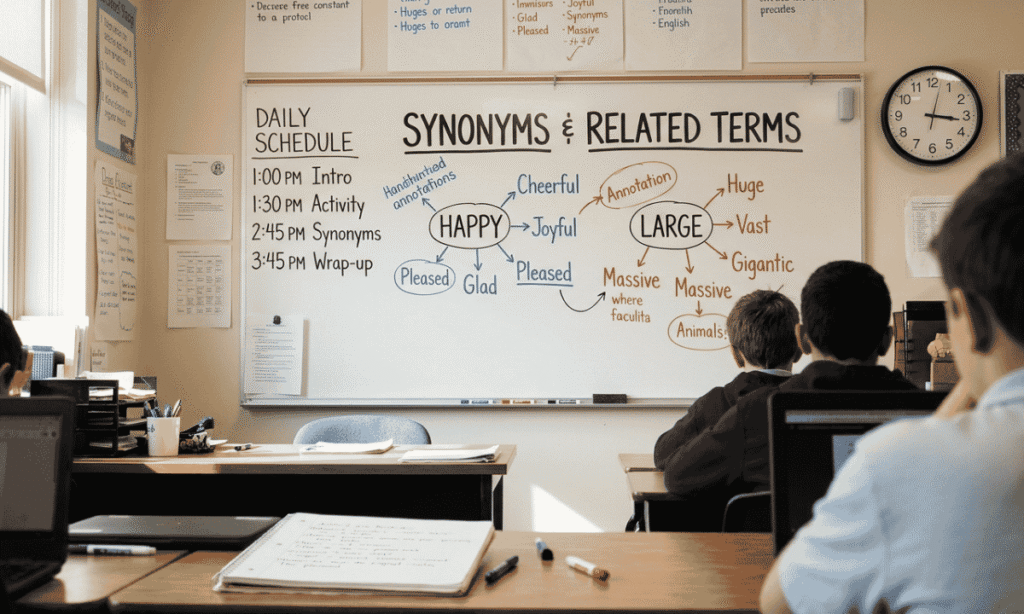
People ask this question in many ways. Search engines treat these phrases as close cousins. They all point to the same idea: a countdown to a set time.
Common ways to say it:
- Time left until quarter to three
- Time remaining until 14:45
- Minutes until 2:45 PM
- How many hours until the afternoon deadline
- Countdown to a set time today
Related Time Keywords
These terms often appear near this topic:
- Countdown timer
- Time calculator
- Time difference
- Current time
- Target time
- Elapsed time
- Time remaining
- 24-hour clock
- Military time
- Time zone converter
- Hours and minutes
- Quarter to three
Each term has a small difference. “Elapsed time” looks back at time that has passed. “Time remaining” looks forward. A “time zone converter” changes the clock between regions.
Knowing these words helps you choose the right tool. It also helps you search faster.
Short searches such as “time left until 14:45” often give instant results. Longer phrases can bring more detailed guides and calculators.
5. When to Use
Use a countdown to 2:45 PM whenever a fixed time shapes your plans. Here are the most common cases.
For Appointments
Doctor, dentist, and salon visits run on strict slots. A countdown helps you leave on time. Add travel and parking time to your total.
Late arrivals can cost you the slot.
For School
Students use countdowns to track bell times, exams, and submission deadlines. A clear number reduces last-minute panic. It also helps you decide how long to spend on each task.
For Work
Meetings, client calls, and report deadlines depend on exact times. A countdown lets you plan focus blocks. You can also decide when to stop one task and start the next.
For Travel
Trains, buses, and flights leave on schedule. Count back from the departure time to find your leave time. Always add a safety buffer.
For Cooking
Meals often work backward from a serving time. Subtract the cooking time to find your start time. A countdown keeps every dish ready together.
Hot food tastes better when it is served on time.
For Exercise
Gym classes, runs, and workouts need timing. A countdown tells you when to warm up. It also shows when to eat a light snack before training.
Rest breaks between sets also work well with short timers.
For Online Meetings
Webinars and video calls often include people from many regions. Check the countdown and the time zone before you join. Test your audio and camera early.
A countdown also reminds you to close other apps before the call.
For Daily Planning
A countdown turns a vague afternoon into clear blocks. You know when to start, pause, and finish. That makes your day feel calmer.
Try writing the countdown in your planner. Add small tasks between now and the target time. This habit builds focus and reduces stress.
6. When NOT to Use
Simple subtraction does not work in every case. Watch out for these situations.
When You Do Not Know the Current Time
Without a starting point, you cannot count. Check a reliable clock first. Phones sync with network time, so they are usually accurate.
A wall clock that runs slow can ruin the result. Compare it with your phone if you are unsure.
When the Time Zone Is Different
Is the target in your city or another one? Convert first, then count. Otherwise, your answer may be off by several hours.
When 2:45 PM Has Already Passed
Say it is 3:30 PM. The subtraction gives a negative number. You must count to the next day instead. That is 23 hours 15 minutes.
When the Date Is Important
Some events are not today. A deadline on Friday needs a day count too. Add whole days to your hour count.
For example, noon today to quarter to three tomorrow is more than 26 hours.
When Daylight Saving Time Matters
Clocks jump one hour in many regions twice a year. A countdown across that change can be off by an hour. Use a tool that handles dates and zones.
7. Common Mistakes
Small errors cause big timing problems. Avoid these seven.
Most of these slips take seconds to fix. You only need to spot them first.
Mistake 1: Forgetting AM and PM
2:45 AM and 2:45 PM are twelve hours apart. One missing label can ruin your plan. Always check it twice.
Many digital clocks show a small PM dot. Look for it before you trust the number.
Mistake 2: Subtracting the Hours but Ignoring Minutes
From 12:50 PM to quarter to three is not 2 hours. It is 1 hour 55 minutes. Always include the minutes in your math.
Mistake 3: Forgetting the Next Day
After the time passes, the next one is tomorrow. Do not show a negative result. Add 24 hours instead.
For example, at 4:00 PM the next one is 22 hours 45 minutes away.
Mistake 4: Using the Wrong Time Zone
Your device shows local time. The event may use another zone. Confirm the zone listed on the invite.
If the invite has no zone, ask the host before you plan.
Mistake 5: Rounding Too Early
Rounding 12:50 PM up to 1:00 PM hides ten minutes. Calculate the exact gap first. Round at the end, if you must.
Exact numbers keep your plan safe.
Mistake 6: Confusing 24-Hour and 12-Hour Time
14:45 equals quarter to three in the afternoon, but 04:45 does not. For hours above 12, subtract 12. Then add PM.
A quick check is to ask whether the hour is above or below 12.
Mistake 7: Forgetting That Time Changes
The clock keeps moving while you calculate. Your answer is only a snapshot. Recheck it close to the event.
Delays, traffic, and late starts can also move the real start time.
8. Comparison with Similar Terms

Countdown phrases look alike, but they mean different things. This table makes them clear.
Mixing them up leads to wrong answers. Each phrase looks at time from a different angle.
| Term | Meaning | Example |
| Time until | Gap from now to a future time | 1 hour 30 minutes until 14:45 |
| Time since | Gap from a past time to now | 30 minutes since 2:15 PM |
| Time between | Gap between two set times | 1:00 PM to 3:00 PM is 2 hours |
| Elapsed time | Time already used | 2 hours spent on a task |
| Time zone difference | Offset between two places | 5 hours |
12-Hour vs. 24-Hour Format
The 12-hour clock uses AM and PM. The 24-hour clock runs from 00:00 to 23:59. Both show the same moment in different ways. Many countdown tools accept either one.
Military teams, hospitals, and airlines prefer the 24-hour style because it avoids AM and PM errors.
| Moment | 12-Hour | 24-Hour | Minutes After Midnight |
| Early morning | 2:45 AM | 02:45 | 165 |
| Just after midnight | 12:45 AM | 00:45 | 45 |
| Just after noon | 12:45 PM | 12:45 | 765 |
| Afternoon | 2:45 PM | 14:45 | 885 |
Example Countdown Table
Use this chart for a quick countdown to 2:45 PM from common starting times.
| Current Time | Time Remaining |
| 9:00 AM | 5 hours 45 minutes |
| 10:00 AM | 4 hours 45 minutes |
| 11:00 AM | 3 hours 45 minutes |
| 12:00 PM | 2 hours 45 minutes |
| 1:00 PM | 1 hour 45 minutes |
| 1:45 PM | 1 hour |
| 2:00 PM | 45 minutes |
| 2:30 PM | 15 minutes |
| 2:40 PM | 5 minutes |
| 3:00 PM | Passed (23 hours 45 minutes until tomorrow) |
Notice the pattern. Each hour that passes removes 60 minutes from the countdown.
You can also read the table backward. If you have 45 minutes left, the current time is 2:00 PM.
Read More What Time Was It 11 Hours Ago
Conclusion
Working out how long until 2:45 PM takes only a few seconds. Subtract your current time from the target time. Then write the answer in hours and minutes.
Watch for the common traps. Check AM and PM, the time zone, and the date. Recheck the clock as the moment gets close.
Keep the table handy for quick checks. With a little practice, you will plan every appointment, class, and meeting with confidence.
Next time someone asks about the time left, you will have the answer in seconds.
Frequently Asked Questions
How long until 2:45 PM?
Subtract your current time from 2:45 PM. At 1:45 PM, for example, one hour remains.
What is 2:45 PM in 24-hour time?
It is 14:45, written as 1445 in military time. That is 885 minutes after midnight.
How many minutes are there from 12:00 PM to the target time?
There are 165 minutes. That equals 2 hours and 45 minutes.
Is this time in the morning or afternoon?
It is in the afternoon. The morning version is 2:45 AM.
What if the time has already passed today?
Count to the same time tomorrow. Add 24 hours to the target, then subtract your current time.
What is the easiest way to calculate the time remaining?
Count up to the next full hour, then add the leftover minutes. This method avoids most mistakes.
Does the time zone change the countdown?
Yes. Convert the event time to your local zone first. Then do the subtraction.