

What time was it 9 hours ago? You can work it out in seconds. Subtract nine from the current hour. If the result is below one, add twelve and switch AM or PM.
This guide makes finding 9 hours ago simple. You get clear steps, tables, and real examples. You also learn how time zones change the answer.
Quick answer: If it is 3:00 PM now, then 9 hours ago it was 6:00 AM.
Why Do People Search “What Time Was It 9 Hours Ago”?
Most people want one fast, exact answer. They don’t want a long lesson.
Common reasons include:
- Checking when a message or email was sent
- Tracking sleep or nap time
- Matching a medicine schedule
- Reviewing a work shift
- Comparing time with a friend abroad
- Reading a log file or time stamp
Time math feels easy until midnight gets involved. Then the date changes and mistakes creep in.
Many searchers add “Central time” or “Eastern time.” That shows how often time zones cause confusion.
Understanding Time Arithmetic
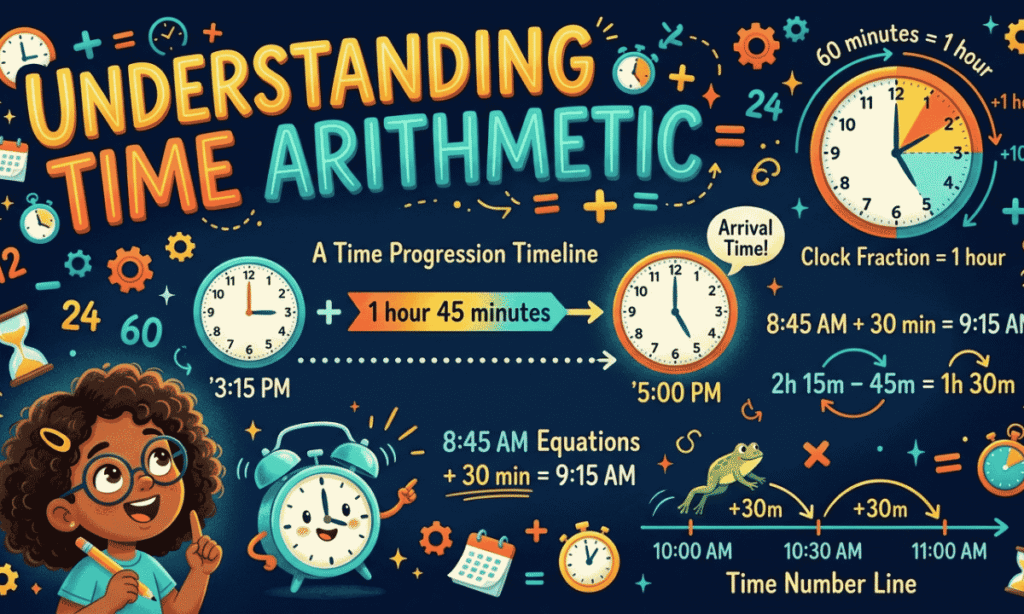
Time arithmetic is basic math with a twist. A day has 24 hours, not 10. The clock resets after 12 or 24.
Picture a clock as a circle. Subtracting hours moves you backward around it. Passing 12 flips AM to PM. Passing midnight changes the date.
Here are a few terms you will see often:
| Term | Meaning |
| Elapsed time | How much time has passed |
| Time difference | The gap between two clock times |
| UTC offset | A zone’s distance from Coordinated Universal Time |
| 24-hour clock | Military time, from 00:00 to 23:59 |
| Time stamp | The recorded date and time of an event |
What Time Was It 9 Hours Ago Using the 12-Hour Clock
The 12-hour clock uses AM and PM. That is where most errors happen.
Use this rule. Subtract 9 from the hour. If the answer is 1 or higher, keep the same AM or PM. If it is zero or negative, add 12 and flip AM or PM.
The table below shows the result for common times.
| Current time | Nine hours earlier | Day |
| 12:00 AM | 3:00 PM | Previous day |
| 3:00 AM | 6:00 PM | Previous day |
| 6:00 AM | 9:00 PM | Previous day |
| 9:00 AM | 12:00 AM | Same day |
| 10:00 AM | 1:00 AM | Same day |
| 12:00 PM | 3:00 AM | Same day |
| 3:00 PM | 6:00 AM | Same day |
| 6:00 PM | 9:00 AM | Same day |
| 9:00 PM | 12:00 PM | Same day |
| 11:00 PM | 2:00 PM | Same day |
Notice the pattern. Any time before 9:00 AM lands on the previous day.
When was 9 hours ago from today?
“Nine hours ago from today” means nine hours before this exact moment. It may fall today or yesterday. That depends on your current time.
Say it is 2:30 PM on Thursday. Then it was 5:30 AM on Thursday.
Now say it is 2:30 AM on Thursday. Then it was 5:30 PM on Wednesday.
Minutes never change. Only the hour and the date move. So 9 hours ago from 2:30 PM always ends in :30.
What time Was It 9 Hours Ago central time

Central Time (CT) covers much of the central United States. It uses Central Standard Time (CST) in winter. It uses Central Daylight Time (CDT) in summer.
You don’t need the UTC offset for this one. Just read your local Central clock and subtract nine hours.
Here are two examples:
- 4:45 PM CT becomes 7:45 AM CT, same day.
- 8:15 AM CT becomes 11:15 PM CT, previous day.
The label (CST or CDT) stays the same. Trouble only starts if clocks changed during that nine-hour window.
What time was it 9 hours ago eastern time
Eastern Time (ET) works the same way. Read the Eastern clock. Then subtract nine hours.
For example, 3:00 PM ET becomes 6:00 AM ET. And 2:00 AM ET becomes 5:00 PM ET on the previous day.
Eastern is one hour ahead of Central. So if it is 10:00 AM ET, it is 9:00 AM CT. Nine hours earlier, it was 1:00 AM ET and 12:00 AM CT.
Always finish the math in one zone first. Convert afterward.
How to Calculate 9 Hours Ago Without a Calculator
You don’t need an app. You need three small steps.
Learn them once and you can do this in your head. The next sections walk through each step.
Step 1: Identify the Current Time
Look at a clock you trust. Note the hour, the minutes, and AM or PM.
Check the time zone too. A phone clock may show a different zone than your laptop.
Write it down if needed. Example: 2:20 AM.
Step 2: Subtract Nine Hours
Take the current hour and subtract 9. Leave the minutes alone.
If it is 5:40 PM, think of it as 17:40. Then 17 minus 9 equals 8. So 9 hours ago it was 8:40 AM.
Using 24-hour time removes the AM and PM guesswork. Many people find it easier.
Step 3: Add 24 Hours
Sometimes the subtraction gives zero or a negative number. Add 24 to fix it.
Take 2:20 AM, which is 2:20 in 24-hour time. Then 2 − 9 = −7. Add 24 and you get 17. That is 5:20 PM on the previous day.
The extra 24 simply wraps you back around the clock.
When the Previous Day Matters
The date matters whenever your answer needs the 24-hour fix. If you had to add 24, the answer is yesterday.
This matters for:
- Deadlines and due dates
- Travel bookings
- Medical or sleep logs
- Legal or payroll records
A wrong date can cause bigger problems than a wrong hour. Always write the date next to the time.
Breaking Down 9 Hours
Nine hours is a clear, fixed amount of time. It helps to see it in different units.
| Unit | Value |
| Minutes | 540 |
| Seconds | 32,400 |
| Days | 0.375 |
Here are three mental shortcuts:
- Subtract 10 hours, then add 1 hour back.
- Subtract 12 hours, then add 3 hours back.
- Subtract 6 hours, then subtract 3 more.
For 4:00 PM, the 12-hour trick works well. Go back to 4:00 AM, then forward 3 hours to 7:00 AM.
Using a Time Calculator
A time calculator is the fastest option. Enter the current time and a −9 hour difference. You get the answer at once.
Good tools include a “hours ago” calculator, a time duration calculator, and a world clock. Websites like Time and Date and Time.is are popular choices. Your phone’s world clock app works too.
These tools are handy when you need 9 hours ago across several zones. They also handle daylight saving automatically.
Still, learn the manual method. It helps you spot errors.
What Happens Across Different Time Zones?
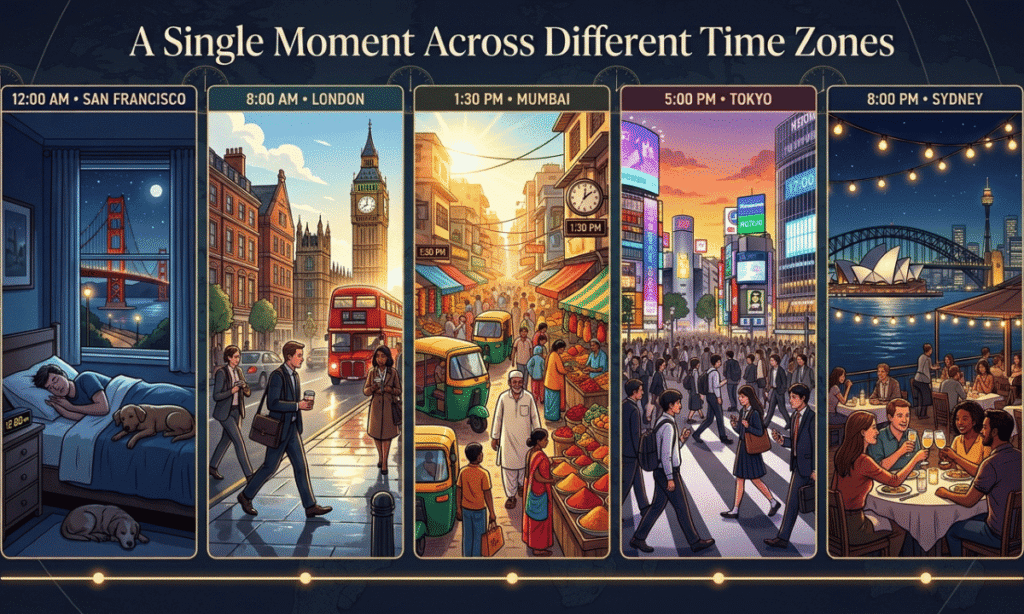
Time zones add one more layer. Every zone sits a set number of hours from UTC.
The trick is simple. Subtract nine hours first. Then apply the zone difference. Or convert first, then subtract. Both give the same result.
Take 12:00 PM UTC as the moment “now.” The table shows local times, assuming daylight saving is active where it applies.
| Zone | UTC offset | Local time now | Nine hours earlier |
| UTC | +0 | 12:00 PM | 3:00 AM |
| Eastern (EDT) | −4 | 8:00 AM | 11:00 PM (prev. day) |
| Central (CDT) | −5 | 7:00 AM | 10:00 PM (prev. day) |
| Pacific (PDT) | −7 | 5:00 AM | 8:00 PM (prev. day) |
| UK (BST) | +1 | 1:00 PM | 4:00 AM |
| Pakistan (PKT) | +5 | 5:00 PM | 8:00 AM |
| India (IST) | +5:30 | 5:30 PM | 8:30 AM |
Offsets shift when daylight saving time starts or ends. Always confirm the current offset.
9 hours ago from 6am
This is a very common search. The answer is 9:00 PM on the previous day.
Here is the math:
- Start with 6:00 AM.
- Subtract 9 hours to get −3.
- Add 12 to get 9, and flip to PM.
- The date moves back one day.
Compare it with 6:00 PM. Nine hours earlier is 9:00 AM the same day. Same numbers, very different result.
What Time Was It 9 Hours Ago in Everyday Life
This small calculation shows up all day long. You may not notice it, but you use it often.
Here are the most common real-life uses.
Tracking Sleep
Say you wake up at 7:00 AM. Nine hours earlier is 10:00 PM.
That shows roughly when you went to bed if you slept a full night. Many people use this to check their sleep schedule and bedtime habits.
Remembering Conversations
You may need to find an old text or call. If it is 4:00 PM now, a message from 9 hours ago came in at 7:00 AM.
This helps when you scroll through chat history. It also helps when you review a time stamp in an email thread.
Medication Reminders
People sometimes count back to see when they last took a dose. If it is 9:00 PM, then 9 hours ago was 12:00 PM.
Treat this only as a clock tool. Follow the label and your doctor’s advice for timing and dosage.
Work Shifts
A standard shift is often nine hours with a break. If you clocked out at 5:00 PM, you started at 8:00 AM.
Payroll teams use the same math to check overtime. It also helps night-shift workers who cross midnight.
Common Mistakes When You Subtract 9 Hours
Most errors are small and easy to avoid. Knowing them in advance helps a lot. Four mistakes appear again and again when people work out 9 hours ago.
Forgetting Midnight
People subtract and get a negative number. Then they stop.
A negative result means you crossed midnight. Add 12 or 24 and move the date back a day.
Mixing Up AM and PM
Crossing 12:00 flips AM and PM. It is easy to forget.
For instance, 2:00 PM minus 9 hours is 5:00 AM, not 5:00 PM. Say the answer out loud to check it feels right.
Ignoring Time Zones
A friend’s clock may be in another zone. Your own answer will then be wrong for them.
Always ask, “Which zone?” before you start. Then stay in that zone until you finish.
Subtracting From the Wrong Hour
Some people subtract from the minutes by mistake. Others use the wrong starting time.
Read the clock carefully. Then subtract only from the hour value.
Reverse Time Calculation Made Simple
Sometimes you need the opposite answer. You want the time nine hours from now.
Just add instead of subtract. If it is 4:00 PM, adding nine hours gives 1:00 AM the next day.
The same rules apply. Wrap around the clock, and move the date forward. This is useful for deadlines, flights, and scheduled posts.
Why Online Time Calculators Are So Popular
People love speed. A calculator gives an answer in one second.
They also avoid human error. They handle midnight, AM and PM, and daylight saving for you.
Another reason is convenience. A phone can do it anywhere, in any language. That makes a “9 hours ago” search tool very useful for travelers and remote teams.
Example Calculations
Try these worked examples. Cover the right column first and test yourself.
| Current time | Calculation | Nine hours earlier |
| 7:20 AM | 7 − 9 = −2, add 24 = 22 | 10:20 PM (prev. day) |
| 1:45 PM | 13 − 9 = 4 | 4:45 AM |
| 11:50 PM | 23 − 9 = 14 | 2:50 PM |
| 5:05 AM | 5 − 9 = −4, add 24 = 20 | 8:05 PM (prev. day) |
| 12:30 PM | 12 − 9 = 3 | 3:30 AM |
| 9:10 PM | 21 − 9 = 12 | 12:10 PM |
Notice how the minutes stay the same every time.
Human Memory and Time
People are not great at judging elapsed time. A busy morning can feel like an hour. A dull afternoon can feel like five.
That is why we check clocks. Memory alone is unreliable. Writing the time down is better.
Phrases like “earlier today” or “last night” are vague. A precise hour is far more useful.
Digital Messages and Time Stamps
Apps often show relative time. You may see “9h ago” under a post or message.
Behind the scenes, systems store an exact time stamp. Your device then converts it to your local zone.
That is why two people can see different clock times for the same message. The moment is the same. The display is not.
Time Zones Around the World
The world has dozens of time zones. Most differ by whole hours. A few use half or quarter hours, like India and Nepal.
Some places use daylight saving. Others do not. That means the gap between two cities can change during the year.
The International Date Line adds more complexity. Crossing it can shift the date by a full day.
How Computers Perform Time Difference Calculation
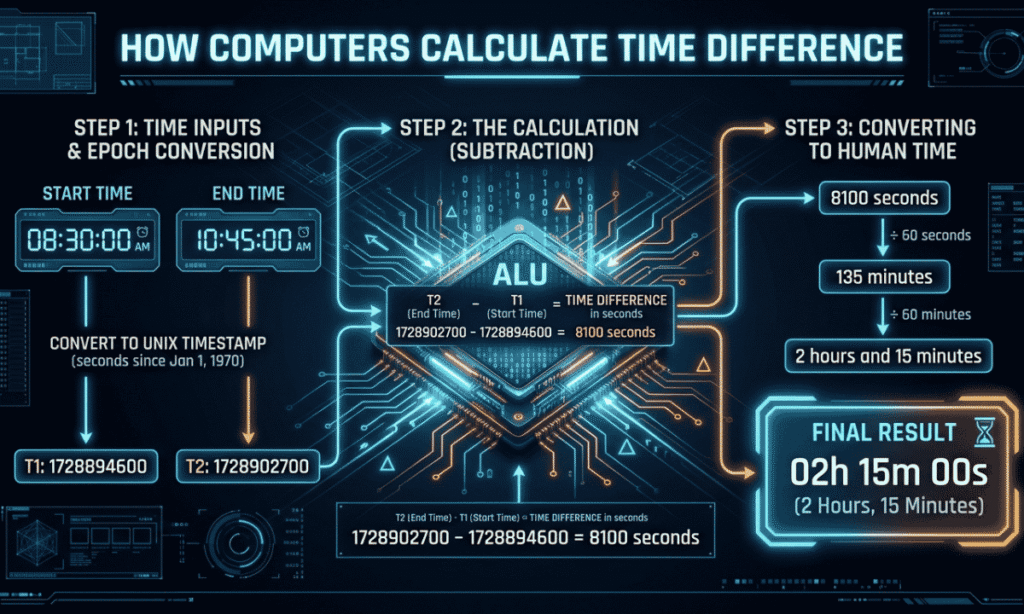
Computers do not use AM or PM. They count seconds from a fixed starting point.
One common system is Unix time. It counts seconds since January 1, 1970, in UTC.
To find 9 hours ago, a program subtracts 32,400 seconds. Then it converts the result to your local time zone. A time zone database handles daylight saving rules.
Many programming languages offer simple tools for this. In Python, for example, you can subtract a timedelta of nine hours.
Manual Formula
Here is a clean formula for any 24-hour time:
Earlier hour = (Current hour − 9 + 24) mod 24
If the result is greater than the current hour, the date moves back one day.
Example: current time is 03:15. Then 3 − 9 + 24 = 18. The answer is 18:15 on the previous day, or 6:15 PM.
For 12-hour time, convert to 24-hour first. Then convert back at the end.
Conclusion
Finding 9 hours ago is easy once you follow the steps. Read the current time, subtract nine hours, and add 12 or 24 when needed.
Watch for midnight, AM and PM, and time zone differences. Those three cause nearly every mistake.
Keep the tables above handy. With a little practice, you will do this math in your head.
Frequently Asked Questions
What time was it 9 hours ago?
Subtract 9 from the current hour. If it is 3:00 PM now, then it was 6:00 AM.
How do I find 9 hours ago from 6 AM?
Six AM minus nine hours is 9:00 PM on the previous day.
Is 9 hours ago always yesterday?
No. It is yesterday only when your current time is before 9:00 AM.
Do minutes change when I subtract nine hours?
No. Only the hour changes. 2:45 PM becomes 5:45 AM.
How many minutes are in 9 hours?
Nine hours equals 540 minutes, or 32,400 seconds.
Does daylight saving time affect 9 hours ago?
Yes, if clocks changed within the last nine hours. The result then shifts by one hour.
What is the fastest way to check 9 hours ago?
Use a phone world clock or an online time calculator, and double-check with the manual method.